
High performance web design for dentists that converts visitors into new patients
Specialist Dental Website Design solutions to attract new patients to grow your clinic
At Click Finder, we specialise in website design for dentists and dental practices across the UK. We create modern, professional websites designed to attract new patients, improve online visibility, and grow your practice.
Our dental websites are built with both patients and search engines in mind, combining clean design with SEO best practices to help your practice rank higher on Google and generate more enquiries.
Whether you need a brand-new dental website or a redesign of your existing site, our team delivers mobile-friendly, fast-loading websites tailored specifically for dental clinics.

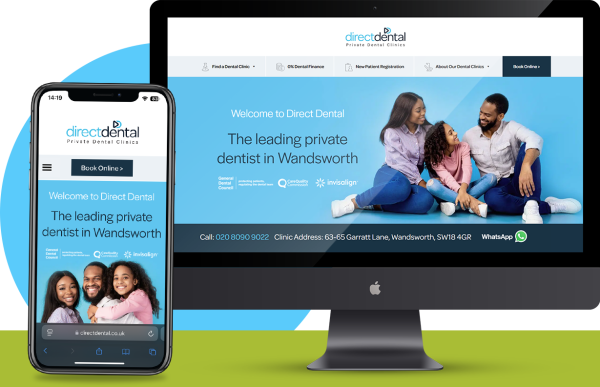
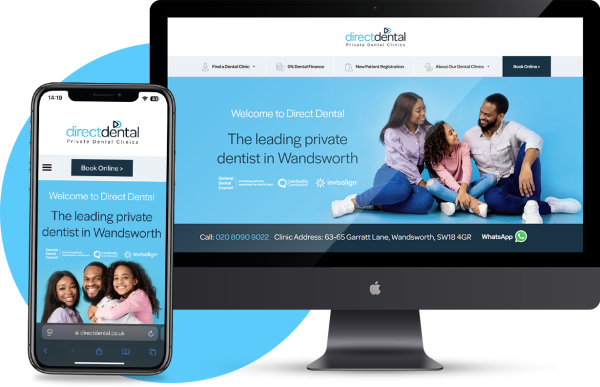
Attract and secure more high-value patients
with strategic, results-focused dental web design.
Bespoke dental web design to drive consistent enquiries and long-term growth.
Elevate your brand, boost engagement, and drive growth
- Custom, responsive design tailored beautifully to your brand
- User experience (UX) and conversion-focused design layout
- Mobile and tablet optimisation for seamless browsing on any device
- Optimised loading speeds and strong Core Web Vitals performance
- SEO-friendly site architecture and clean coding for stronger rankings
- Custom-built websites in WordPress using Elementor Pro
- Integration with booking forms, CRM, or marketing tools
- Secure and compliant with data protection and SSL encryption
- Google Analytics integration and full Search Console configuration
- Ongoing support, maintenance and technical assistance as needed.
Strong digital performance sets up your dental clinic’s long-term growth
The primary aim of website design for dentists is to build an intuitive, visually engaging platform that naturally guides patients toward booking an appointment; when executed well, it can achieve much more.
Convert dental website visitors into returning patients
Built to convert website visitors into genuine enquiries, appointment bookings, and loyal long-term patients.
Immediately establish trust and credibility
Design a polished, contemporary dental website that gives prospective patients confidence in your expertise and care.
Position your clinic as a leading healthcare provider
Highlight your dental treatments and essential information with a design that reflects your professionalism and expertise.
Fully optimised with user experience and conversion in mind
Lead visitors smoothly to treatment pages, calls to action, and appointment bookings.
Differentiate your dental practice from local competition
Create a striking first impression that distinguishes your dental practice from every other clinic.
Enhance your dental practice’s brand
Strengthen your dental practice's visual identity and messaging on every page for cohesive brand recognition.
Ultra-fast, mobile-optimised dental website performance
Engage patients on the move with responsive, quick-loading dental web design carefully optimised for all types of devices.
Increase patient interaction and satisfaction with your dental practice
Boost patient engagement with easy-to-use navigation, informative content, and prominent calls to action.
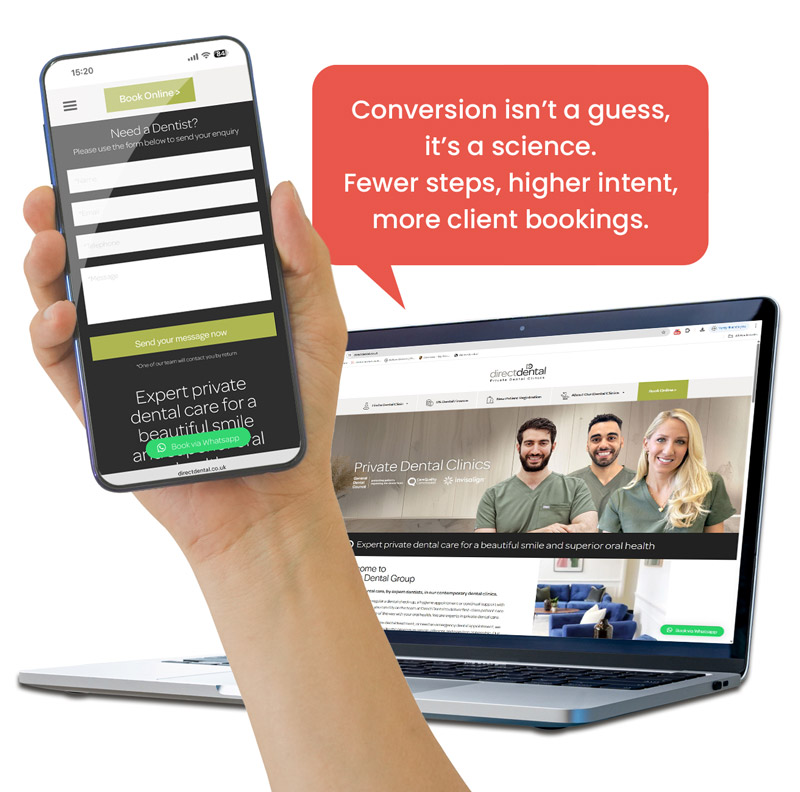
Successful websites for dentists create a smooth patient
journey that generates genuine enquiries and tangible growth.
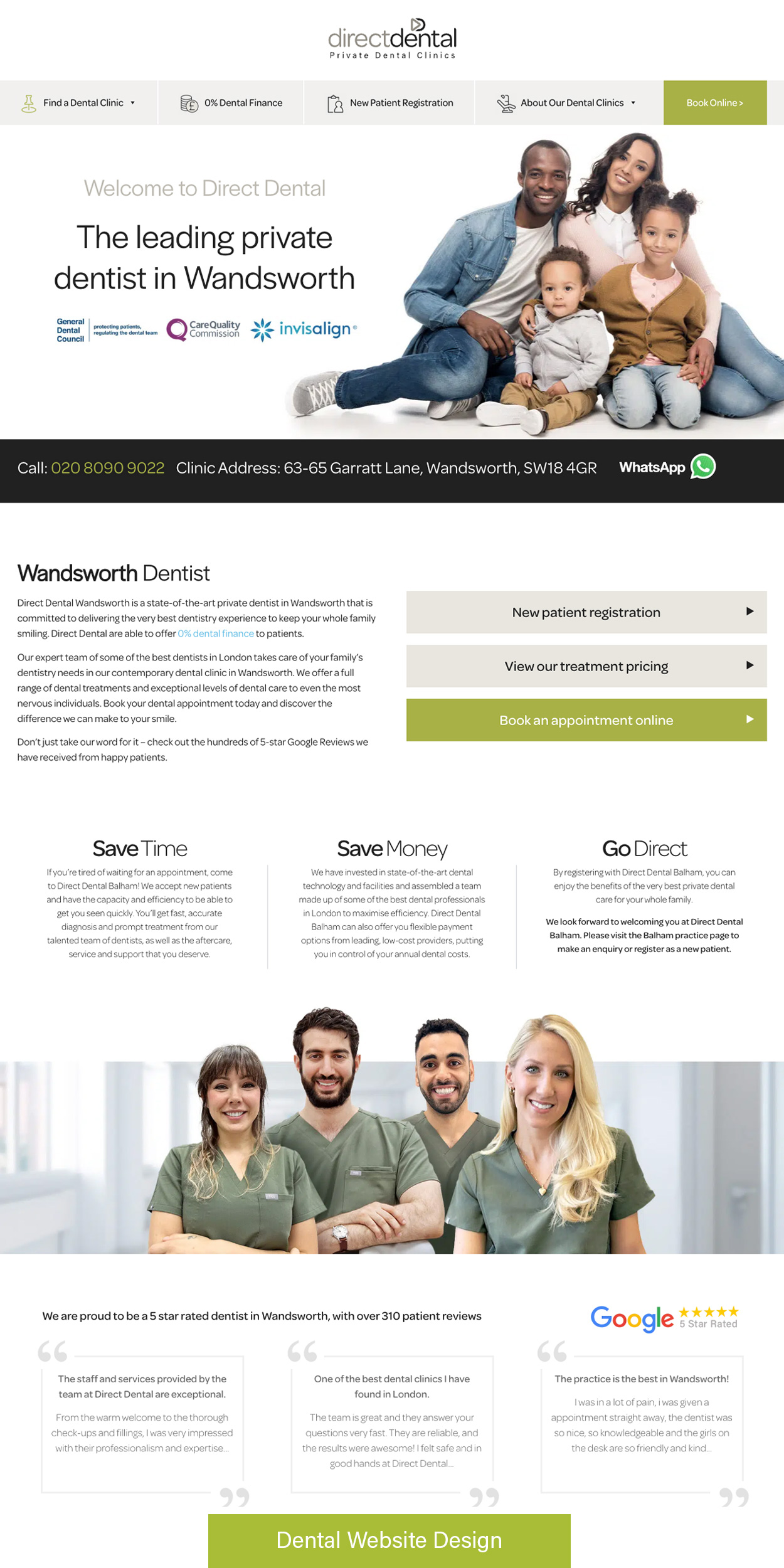
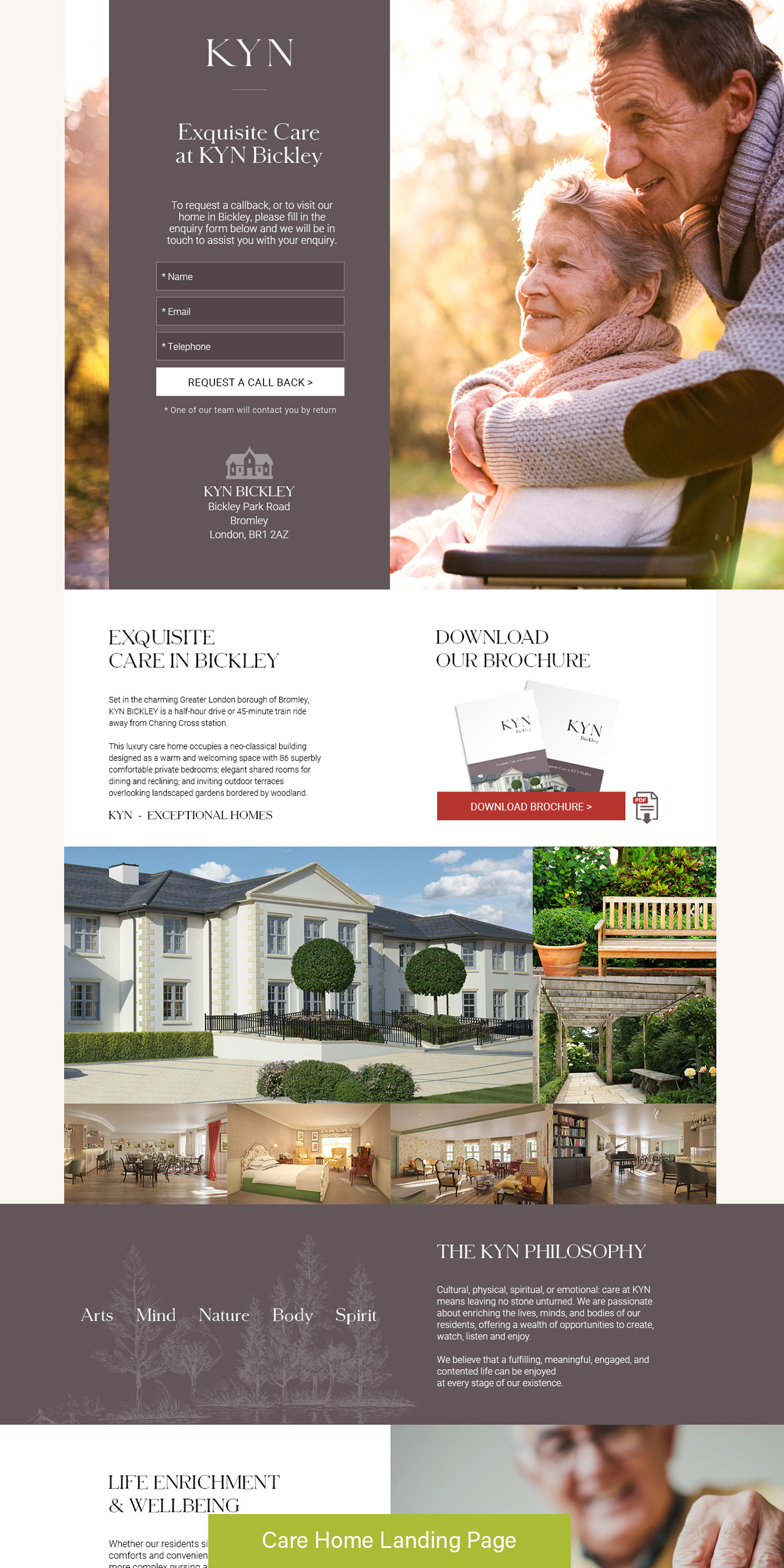
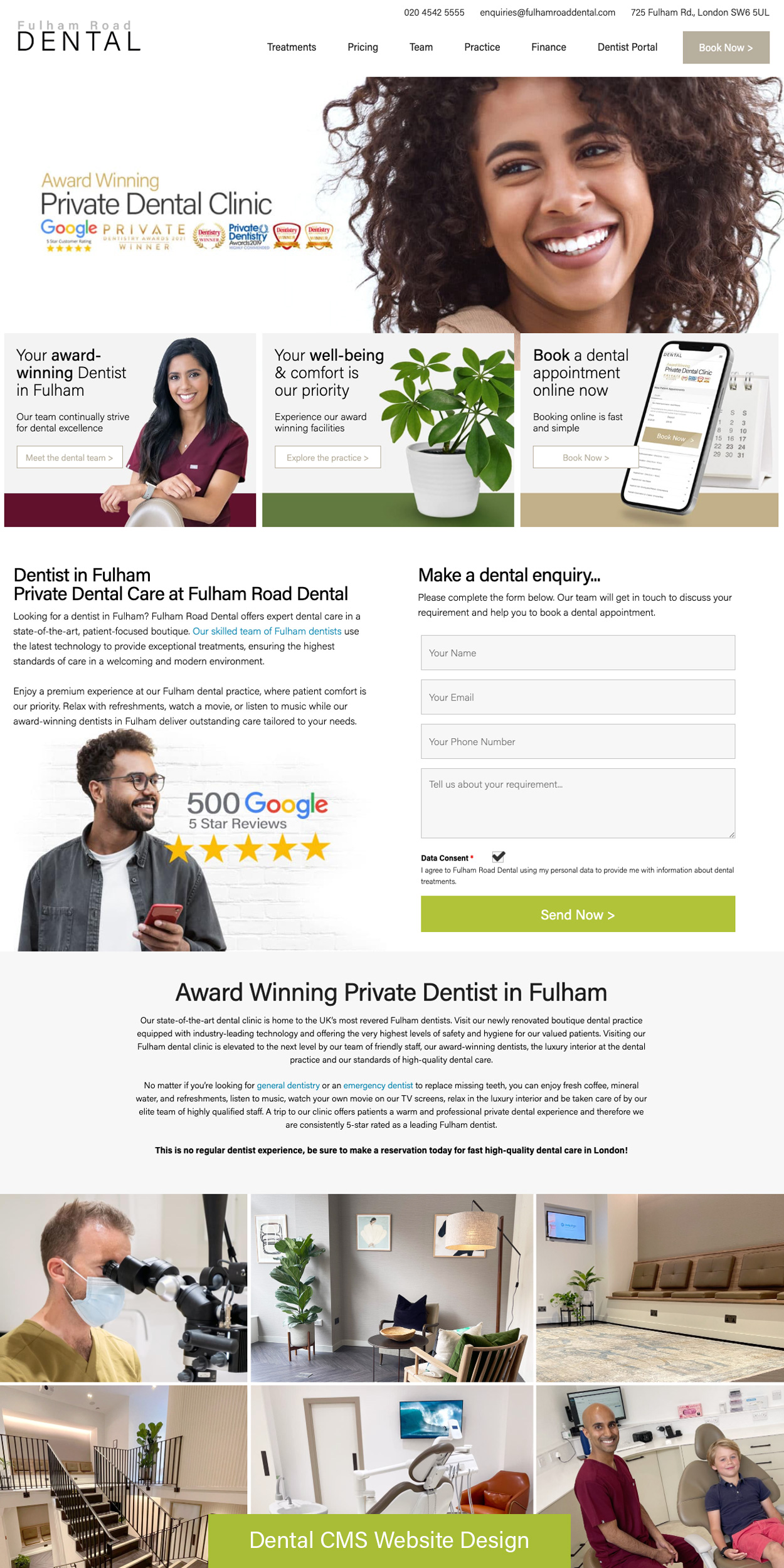
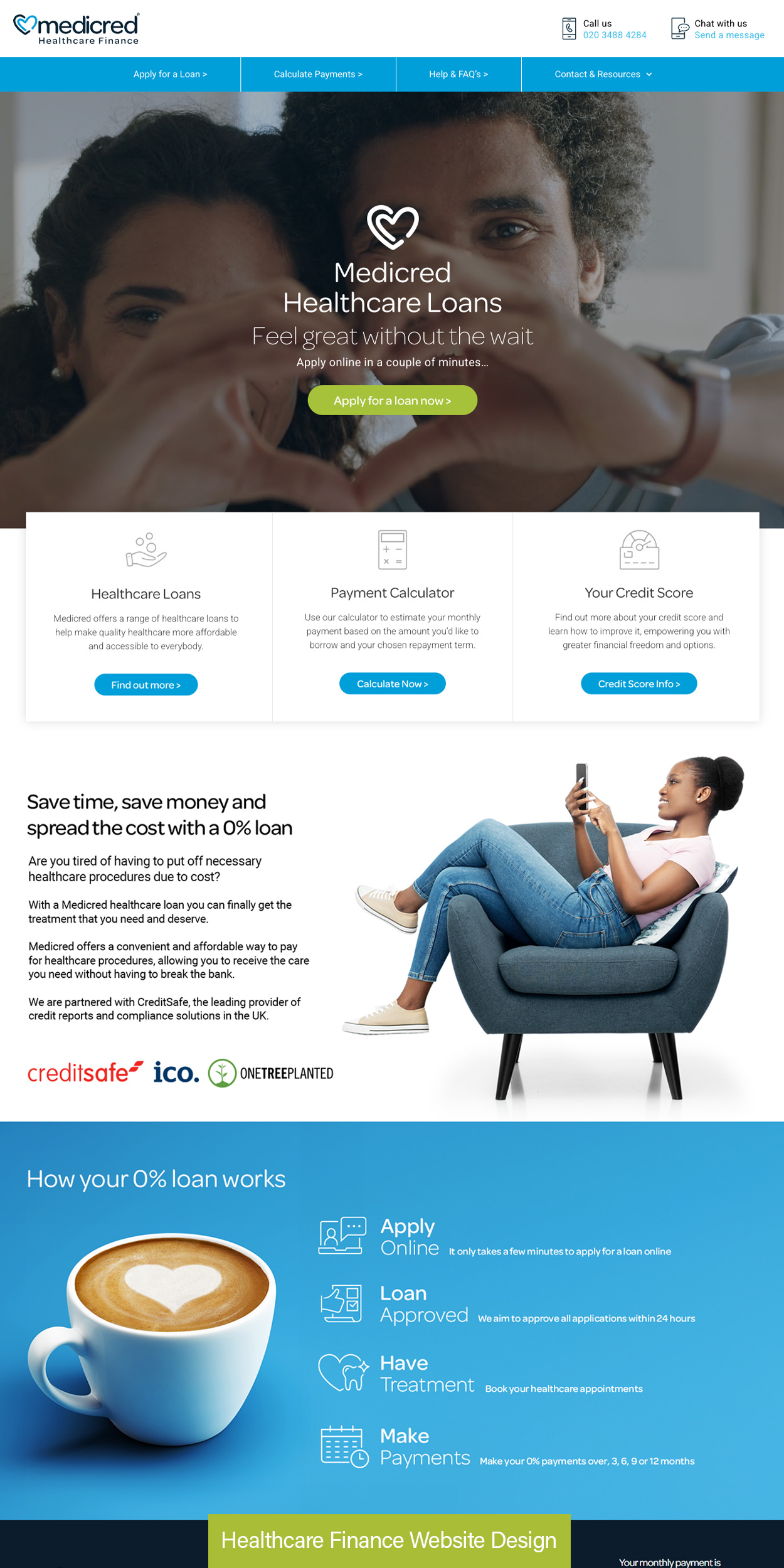
Establishing achievable goals
Considerations as a dental web design client
Defining clear goals and deadlines is crucial for a successful dental web design project. Here are important considerations to bear in mind during the process.
Successful dental web design takes time and careful planning
Defining clear goals and deadlines is crucial for a successful dental web design project. Here are important considerations to bear in mind during the process.
Your contributions influence the final design
Sharing information about your dental practice and patients with us lets us design a website that genuinely represents your brand and connects with your audience.
Good dental website design is more than just visuals
At the foundation of every successful dental website is layout, user experience, branding, and performance optimisation.
User behaviour can be unpredictable
Not every patient will immediately convert, so analysing real data and refining your site are essential for better results.
Conversion is everything
Web design for dentists should do more than look appealing; it should direct visitors to book, call, or make an enquiry.
Content must work in tandem with site structure
Concise messaging, easy navigation, and a strategic layout are just as important as visual appeal for a dental website.
Speed, mobile-friendliness and security matter
Patients expect fast, secure browsing on every device, so making sure your site loads quickly, protects data, and works flawlessly on mobile is essential.
Dental website design is just one part of a broader marketing strategy
Your website should support your SEO efforts to create a cohesive, powerful online presence for your dental practice.
Transparent pricing & straightforward terms
View our SEO pricing & contract terms upfront, no surprises, no pressure
Associated Services for Dental Website Design
Design
Without a clear identity, you compete on price.
With powerful brand material, you lead with value.
Content & PR
Without the right copy, SEO can’t deliver.
With it, you rank higher and convert faster.
SEO
Without SEO, your customers can’t find you.
With it, you become their first choice.

Client reviews

Camelia Rahoui
Clinic Operations Manager
Direct Dental Group

As the Operations Manager for three clinics, I have worked closely with Rebecca Hubbard and have seen the impact of her expertise first hand. Her work through Click Finder has brought real structure, clarity and measurable growth to each of our dental practices.
Rebecca’s strength lies in her strategic planning, business development and the implementation of effective systems tailored specifically to the needs of a Dental practice. We have experienced a clear improvement in lead acquisition, stronger enquiry handling, better tracking processes and a more aligned approach between marketing and day to day operations.
Brands that trust us include






We’d love to explore how we can support your patient acquisition goals
Should our dental website have different pages for the different services we offer?
Your dental website should have different pages for the services you offer. This makes it easier for visitors to find exactly what they need, such as teeth whitening, braces, or routine check-ups. Each service can have clear information about what it involves, how long it takes, and what patients can expect. This structure helps your website feel more organised and professional.
Having separate pages also benefits search engine optimisation. Search engines can better understand your website when each service has its own page, which can improve your ranking in search results. This makes it more likely that potential patients searching online will find your practice, and helps build trust and confidence.
Individual pages let you include images, testimonials, and FAQs that are specific to each service you offer, so visitors can get answers to common questions before contacting you. If all services are on one page, it can feel cluttered and confusing, and important details might be overlooked. Separate pages improve navigation, provide more information, and create a better experience for anyone visiting your website.
Which specific elements make a dental website easy for patients to navigate?
A dental website that is easy for patients to navigate starts with a clear and simple menu that helps patients move between pages without confusion. Key sections, such as services, contact details, and booking, should be easy to find without scrolling through pages and pages of content, and using headings, subheadings, and short paragraphs helps patients understand each page quickly. Buttons and links should be clearly labelled, and a search bar can help find specific information fast.
Maintaining a consistent layout and design across pages is important. Fast-loading pages and mobile-friendly design ensure the website works well on phones and tablets, while clear call-to-action buttons, such as “Book an Appointment” or “Contact Us,” guide patients to the next step.
A footer with important links, opening hours, and contact numbers makes information accessible from any page. Simple forms and organised content also help patients find what they need quickly. A website with clear menus, headings, and buttons makes it much easier for patients to use and improves their experience.
How do we optimise our website for AI search and summaries?
To optimise your website for AI search and summaries, start with clear, short sentences and straightforward words. Use headings, subheadings, and bullet points to organise information, as these make it easier for AI to understand your content. Structured content helps AI identify key points for summaries, so focus each page on a single topic, such as a specific dental service, to avoid confusion.
Although it is relatively new within the world of marketing, generative engine optimisation (GEO) is important because it helps AI create summaries, answer questions, and present your content in search results. Including relevant keywords naturally, along with meta descriptions, image alt text, and descriptive page titles, gives AI context. Internal links between pages show AI how your website is connected and which pages are most important.
Updating content regularly also improves GEO. AI prefers current and accurate information, so review pages for outdated details and add new material. Providing clear answers to common questions in paragraphs or FAQs allows AI to generate precise summaries, making it easier for patients to find information quickly and supporting your marketing strategy.
What types of images or graphics should we use in our dental web design?
When designing a dental website, it is important to use clear, professional images. Photos of your clinic, treatment rooms, and equipment help patients feel comfortable and familiar with your practice. Staff photos, including dentists and dental nurses, create a friendly and trustworthy impression. High-quality images should be well-lit and in focus, avoiding cluttered or staged pictures.
Graphics and illustrations are also useful. Simple diagrams showing procedures, such as how braces work or the steps in a cleaning, help patients understand the treatment and what to expect. Icons for services, booking, or contact sections make navigation easier and improve design, while infographics can present information clearly, such as dental care tips or treatment timelines, in an engaging way.
Using authentic images of real patients (with consent) adds credibility and relatability. Stock photos are acceptable if they look natural and professional, but avoid overly generic images. Consistent colours, styles, and formats across all images make the website feel organised and polished, helping visitors feel confident about choosing your practice.
Should we include a blog on our site and, if so, what should we write about?
Including a blog on your dental website can be helpful for patients and your practice. A blog allows you to share useful information about dental health, explain common procedures, and give tips for at-home care. Regular posts show that your practice is active and knowledgeable, which builds trust with visitors. It also provides fresh content for your website, which is important for search engines and helps more people find your practice online.
You should write about topics that are relevant and easy for patients to understand. This could include guides on brushing and flossing, the benefits of treatments, or what to expect during a check-up. Seasonal tips, such as how to care for teeth during holidays, are also popular. You can answer common patient questions or explain new dental technologies in simple language to make your blog helpful and engaging.
Sharing success stories or case studies is useful. Posts with clear headings, short paragraphs, and images or diagrams make information easy to follow. A well-maintained blog helps educate patients, improves your online presence, and encourages visitors to return regularly.
How do we make sure our dental website is legally compliant?
To make sure your dental website is legally compliant, start by including clear contact information and practice details. This should include the clinic name, address, phone number, and email. Display any professional registration numbers, such as those for dentists or hygienists, so patients can verify credentials.
Your website should also comply with data protection laws, including the UK GDPR. If you collect personal information, such as patient details, through forms or booking systems, explain clearly how the data will be used and stored. Include a privacy policy that is easy to find and written in simple language. Cookie notices are also important if your website uses tracking tools, as they allow visitors to give consent before data is collected.
Accessibility and safety are also part of compliance. Make your website accessible to people with disabilities, with readable text, alt text for images, and clear navigation. Regularly review legal pages, terms of service, and content to maintain compliance. Following these steps protects your practice and builds trust with patients.
Which keywords are most valuable for a dental practice website?
The most valuable keywords for a dental practice website are those that match what patients search for online. Start with general terms like “dentist near me,” “dental clinic,” or “family dentist,” as these help people find your practice when looking for basic care. Including your town or city in keywords, such as “London dentist” or “Brighton dental clinic,” improves local search results. Long-tail keywords combine location and service, such as “affordable braces in Manchester” or “emergency dentist near me, and attract patients who are ready to book.
Service-specific keywords are also important, as patients often look for information about particular treatments. Phrases like “teeth whitening,” “dental implants,” “orthodontics,” or “root canal” help pages appear for the right queries.
Use a mixture of these different types of keywords naturally in page titles, headings, and content to help search engines understand your website. Including questions patients might ask, such as “how often should I have a check-up?” or “is teeth whitening safe?” can improve visibility in search results and AI summaries.
What is “mobile-first” design, and why does it matter?
“Mobile-first” design means creating a website primarily for mobile devices, such as smartphones and tablets, before designing for desktop computer, focusing on how content, images, and navigation will appear on smaller screens.
Mobile-first design often uses larger buttons, clear menus, and concise text so visitors can find the information they need without zooming or scrolling excessively. By prioritising mobile users, designers ensure the website is easy to read, simple to navigate, and loads quickly on any device.
This design approach matters because most people now browse the internet on mobile devices and, if a website is difficult to use on a phone, chances are that they won’t convert. Search engines, such as Google, also prioritise mobile-friendly websites in their results, meaning a mobile-first website can improve your online visibility.
Mobile-first design also benefits all users by making the website cleaner and faster, even on desktop computers. It improves accessibility for everyone and provides a better overall experience. Adopting a mobile-first approach helps attract and retain patients while supporting your practice’s online success.
Should we use a dental-specific web design agency or a general one?
Using a dental-specific web design agency can be very helpful because they understand the needs of dental practices. They know how to present treatments, services, and staff in a way that appeals to patients. They are familiar with industry requirements, such as including professional registration numbers, patient consent for images, and clear contact details. A specialist agency also knows which features, such as online booking forms or treatment pages, work best for dental websites.
A web design agency that doesn’t specialise in the industry can still create a professional website, but they may need more guidance about dental services and patient expectations, and they also might not be familiar with the most effective layouts, content, or imagery for a dental practice.
Choosing a dental-specific agency can save time and ensure your website meets both patient and regulatory requirements. They understand marketing strategies for dental practices, including local search optimisation, service-specific content, and patient engagement. Using a specialist team helps create a site that looks professional, functions well, and attracts more patients to your practice.
How can we track the performance of our dental website?
You can track the performance of your dental website by using analytics tools that show how visitors interact with your site. Tools like Google Analytics provide information on how many people visit your pages, which pages are most popular, and how long visitors stay. You can see where your traffic comes from, such as search engines, social media, or direct visits. This data helps you understand what is working well and where improvements are needed.
It is also useful to track specific actions that patients take on your website. For example, you can monitor how many people use online booking forms, click on contact details, or sign up for newsletters. Heatmaps and user recordings can show where visitors click and scroll, helping you identify areas of the site that may be confusing or overlooked.
Regularly reviewing this data helps you make informed decisions about content, design, and marketing strategies. By tracking performance, you can see which services attract the most interest, optimise your pages for better results, and improve the overall experience for patients visiting your website.